Right from the start I knew I didn't want to just paint minis, I wanted to light them as well. I knew nothing about electronics, circuits and such, I'd never soldered in my life. So naturally I did the smart thing and took a red LED from Radio Shack and wired it directly to a 9 volt battery. It was glorious! For a second or two. After that bulb fizzled into a shard of carbon I made the logical next step.

After some home schooling I had a much better idea of what I was doing. I started off with very simple circuits, a single LED, switch, battery and resistor and had some good results. I suppose what I mean is the bulb didn't explode. I got obsessed for about a month, lighting two of my commissions.


For the second picture two LEDs involved. I think the diorama was the forth project I lit and by then I'd learned about parallel circuits. Wiring in this matter is preferred because all LEDs draw the same current from the power source, which allows you to better calculate the resistor needed as well as ensures a long lifespan for the lights themselves.
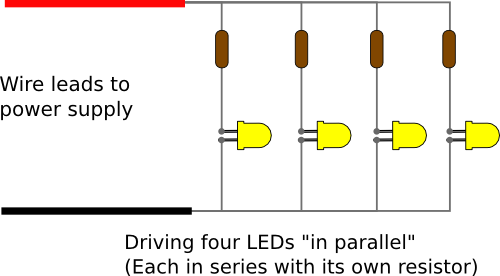
There is quite a wealth of info online by people more knowledgeable them myself:
Also for folks looking for something less daunting:
Its been nearly two years since I've lit up a model and I'm really getting the itch. No clue what it should be, I've drifted away from 40k where most of the large plastic models live, which are well suited for this sort of thing. I have X-Wing and Armada from Fantasy Flight Games, might have to give that a shot.

No comments:
Post a Comment